The sticker price on an air purifier is only part of what you pay. Filter replacements add $40 to $130 every year, and over five years that recurring cost often exceeds the original purchase price. A Levoit Core 400S at $180 looks like a bargain next to a Coway Airmega 400 at $350 - until you account for the fact that the Coway's OEM filter set costs roughly twice as much annually.
This guide breaks down the real annual maintenance cost, OEM versus third-party options, and 5-year total cost of ownership for the four most popular air purifiers we cover at AirFilterGeek. The numbers here come from current Amazon pricing and manufacturer specs - no estimates or guesses.
Affiliate Disclosure: AirFilterGeek participates in the Amazon Services LLC Associates Program. We earn commissions from qualifying purchases through our Amazon links at no extra cost to you. We recommend products based on specifications, performance, and value, not commission rates.
Quick Cost Comparison: Annual Filter Spend by Model
| Model | OEM Filter Cost/Year | 3rd-Party Cost/Year | 5-Year OEM Total | Buy Filters |
|---|---|---|---|---|
| Levoit Core 400S | ~$50 | ~$30-35 | ~$250 | Check Price on Amazon |
| Levoit Core 600S | ~$60 | ~$35-46 | ~$300 | Check Price on Amazon |
| Winix 5500-2 | ~$41-55 | ~$25-35 | ~$205-275 | Check Price on Amazon |
| Coway Airmega 400 | ~$105 | ~$50-70 | ~$525 | Check Price on Amazon |
Costs based on current Amazon pricing, July 2026. Assumes one filter replacement per year under normal household use (6-8 hours/day on auto or medium). High-use or smoke-season households may replace more frequently.
Why Filter Costs Matter More Than Purchase Price

Most air purifier buying guides compare upfront cost, CADR ratings, and room coverage. Those specs matter. But for anyone planning to run a purifier year-round - which is the only way to get meaningful air quality improvement - the ongoing filter cost is the number that actually determines long-term value.
Here is the math that surprises most buyers. The Levoit Core 400S costs roughly $180 to buy. Over five years at OEM filter pricing, you spend about $250 on filters - more than the original purchase price. The Coway Airmega 400 costs $350 to buy and roughly $525 in filters over five years. The unit cost is a one-time hit; the filter cost is every year, forever, for as long as you run the machine.
This guide does not argue that lower maintenance cost automatically means better value. A Coway Airmega 400 covers 1,560 square feet - you would need three Levoit Core 400S units to cover the same space, tripling both your upfront and filter costs. The right comparison is always total cost of ownership for the coverage area you actually need.
Levoit Core 400S: Filter Costs Broken Down
The Levoit Core 400S uses a 3-in-1 filter (pre-filter, True HEPA, activated carbon all in one unit) with model number Core400S-RF. Levoit rates it for 6-8 months under normal use, which translates to 1.5 to 2 filter replacements per year for continuous operation. In practice, most households running on auto or medium speed in non-smoking environments get close to the 8-month end of that range.
OEM filter cost: The Levoit Core 400S-P genuine replacement (ASIN B08SQQK6K7) lists at $49.99 on Amazon and is the top-selling filter for this purifier by a wide margin - 3,000 units sold per month, 4.8-star rating from 3,600+ reviews. At one replacement per year, that is $50/year. At 1.5 replacements (more common in homes with pets or smokers), $75/year.
Third-party alternatives: Compatible H13 HEPA replacement filters from third-party sellers run $30-36 on Amazon. ASIN B0BFQKQ788 from multiple sellers lists at $32-36 with 4.8 stars and 420+ reviews. At one replacement per year, third-party brings annual cost to $32-36 - a savings of roughly $14-18 per year over OEM.
5-year total (OEM): $250. 5-year total (third-party): $160-180.
Check current price for Levoit Core 400S OEM filter on Amazon
Levoit Core 600S: Filter Costs Broken Down
The Core 600S handles larger rooms (up to 635 square feet at 4.8 ACH) and uses a proportionally larger filter - Core600S-RF - rated for 6-12 months. The filter is larger physically than the 400S cartridge, and the OEM price reflects that.
OEM filter cost: The genuine Levoit Core 600S replacement (ASIN B09MK89TXN) lists at $59.99. At one annual replacement, that is $60/year - $10 more per year than the 400S for the same filtration approach but more filter media. Levoit also sells a "Pet Allergy" variant and a "Smoke Remover" variant at higher price points ($79.99 direct from Levoit), but the standard replacement handles normal household allergens, dust, and odors adequately.
Third-party alternatives: Third-party Core 600S filters run $41-46, a $14-19/year savings over OEM. Quality is consistent with the 400S third-party options at similar star ratings.
5-year total (OEM): $300. 5-year total (third-party): $205-230.
The Core 600S justifies the higher filter cost if you need the coverage. If your target room is under 400 square feet, the 400S is the better value - lower unit cost, lower filter cost, same filtration technology.
Check current price for Levoit Core 600S OEM filter on Amazon
Winix 5500-2: The Lowest Long-Term Maintenance Cost
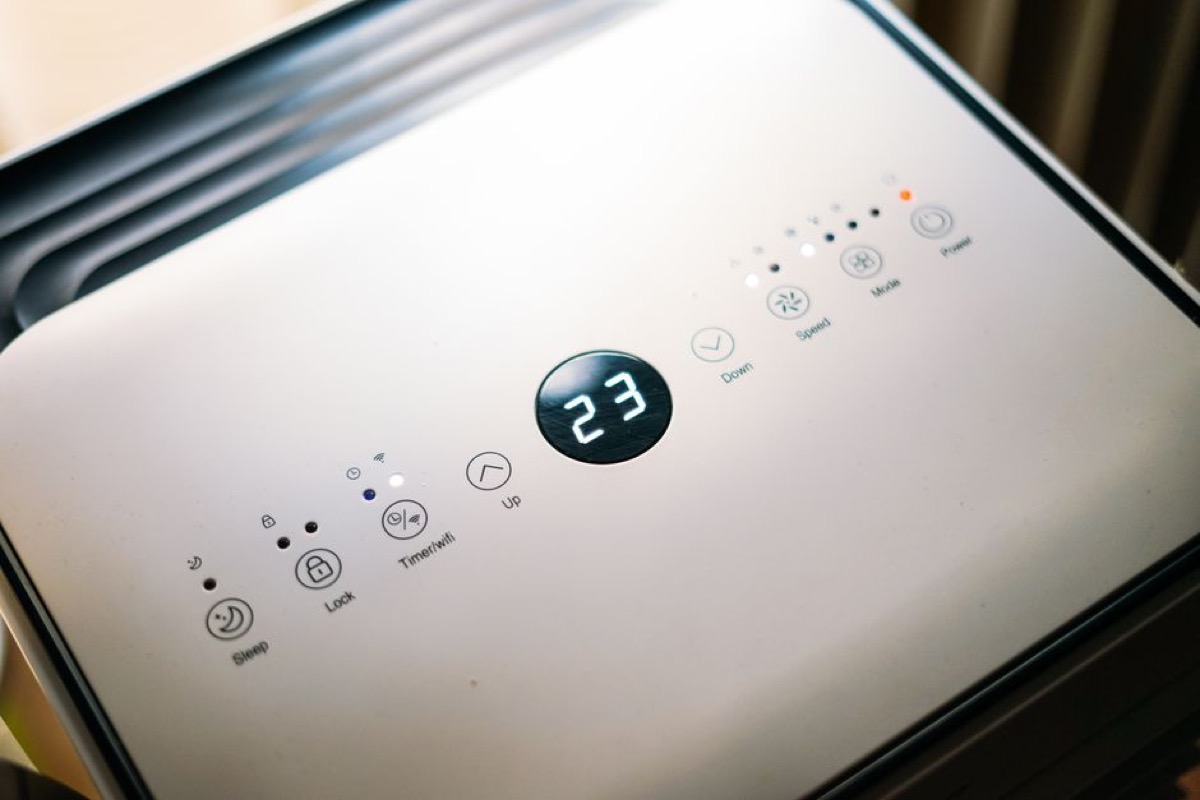
The Winix 5500-2 has a structural cost advantage the Levoit and Coway units do not: its carbon filtration is a washable AOC (Advanced Odor Control) pellet layer rather than a disposable carbon-infused pad. You rinse the carbon layer monthly under running water, let it dry, and reinstall. You only need to buy a complete replacement filter set (Filter H, part 116130) for the HEPA layer - once per year.
OEM filter cost: Genuine Winix Filter H (ASIN B01JLT1OR8) lists at $40.99 on Amazon. That covers one year of HEPA filtration. The washable carbon layer rinses free, no additional purchase needed outside the annual HEPA replacement. Total OEM annual cost: $40-55 depending on where you buy (Amazon, Home Depot, and Target all stock it).
Important note - Filter H vs Filter A: The 5500-2 uses Filter H (part 116130), NOT Filter A (part 115115). This is a common mistake. Filter A fits older Winix models (5300, 5300-2, C535). Multiple third-party Amazon listings incorrectly cross-list both. Always confirm the listing explicitly references "116130" before ordering. The genuine Winix B01JLT1OR8 listing is clearly labeled for the 5500-2.
5-year total (OEM): $205-275. The Winix 5500-2 is the cheapest-to-maintain quality HEPA purifier we track. For households where budget over time matters as much as upfront cost, this is a meaningful advantage.
Third-party options: Third-party Filter H replacements (Flintar, Colorfullife, Funmit) run $25-35 - again, verify the part number references 116130. 5-year cost with third-party: $125-175.
Check current price for Winix Filter H (5500-2) on Amazon
Coway Airmega 400: Higher Maintenance Cost, Justified Coverage
The Coway Airmega 400 is the outlier in this comparison - its OEM filter set costs roughly twice as much as the Levoit 400S or Winix 5500-2. The reason is capacity: the Airmega 400 covers up to 1,560 square feet and uses a dual-filter system (two HEPA panels plus an activated carbon pre-filter) rather than a single 3-in-1 cartridge. More filter media means more cost per replacement set.
OEM filter cost: The Coway Airmega 400/400S Official Replacement Filter Set (AP-2015-FP, ASIN B01C9RIAE4) lists at $104.99 on Amazon. This includes the Max 2 Green True HEPA filter and the Active Carbon filter. At one replacement per year (the typical schedule for normal household use), that is $105/year.
Third-party alternatives: Third-party Airmega 400 filter sets run $49-70 on Amazon. ASIN B0B6TH3SWG (4-piece sets, 2 complete replacements) lists at $68.99, bringing per-replacement cost to about $34. High-rated options from Laukowind and similar sellers hold 4.5+ stars. At one third-party replacement per year, annual cost drops to $50-70.
5-year total (OEM): $525. 5-year total (third-party): $250-350.
The Airmega 400's filter cost makes more sense when you factor coverage. If you are managing air quality in a 1,500-square-foot open-plan home, the alternative is buying three or four smaller purifiers and replacing filters on all of them. A single Airmega 400 at $105/year in filters beats three Levoit 400S units at $50/year each ($150/year total) - and you get better whole-home circulation with one high-CADR unit than three smaller ones.
Check current price for Coway Airmega 400 OEM filter set on Amazon
OEM vs Third-Party Filters: What the Data Says
The HEPA filtration efficiency debate between OEM and third-party filters is largely settled: well-rated third-party filters from established sellers match 99.97% efficiency at 0.3 microns, the standard True HEPA specification. The particle-capture performance is not meaningfully different for normal household allergens and dust.
Where OEM filters have a genuine advantage:
- Carbon layer thickness. OEM filters from Levoit and Coway use denser activated carbon beds. During wildfire smoke events or in homes with strong odor sources (cooking, pets, smokers), thicker carbon delays saturation. Third-party carbon layers are thinner and saturate faster under heavy odor load.
- Filter media density. OEM HEPA media is sometimes denser, which can extend the filter's effective life at high particulate loads. In clean environments, this rarely matters. In a home running the purifier through a smoke season at maximum speed, OEM filters hold up longer.
- Smart mode compatibility. The Levoit Core 400S uses its genuine filter to enable HEPA Sleep Mode - a lower-noise operating mode that requires the filter to pass a pressure check. Some third-party filters trigger a false "replace filter" alert or disable Sleep Mode on smart Levoit units. Check reviews for your specific model before switching.
- Manufacturer warranty. Using third-party filters in the warranty period is technically a warranty risk, though in practice Levoit and Coway rarely deny claims based solely on filter source.
The verdict: for households running purifiers at moderate speeds in non-smoking, low-smoke environments, quality third-party filters are a reasonable choice that saves $15-50 per year. For heavy use during wildfire season or high-odor environments, the OEM carbon capacity is worth the premium.
Annual Maintenance Cost Breakdown by Model
| Model | Filter Part | Filter Life | OEM Price | 3rd-Party Price | Annual OEM Cost |
|---|---|---|---|---|---|
| Levoit Core 400S | Core400S-RF | 6-8 months | $49.99 | $30-36 | $50-75 |
| Levoit Core 600S | Core600S-RF | 6-12 months | $59.99 | $41-46 | $60-90 |
| Winix 5500-2 | Filter H (116130) | 12 months | $40.99 | $25-35 | $41-55 |
| Coway Airmega 400 | AP-2015-FP | 12 months | $104.99 | $50-70 | $105 |
5-Year Total Cost of Ownership
Total cost of ownership includes the purchase price of the unit plus five years of OEM filter replacements at standard intervals. Energy cost is excluded because it is small ($10-25/year for most HEPA units on standard household rates) and roughly equal across models at comparable CADR outputs.
| Model | Unit Cost | 5-Year OEM Filters | 5-Year Total (OEM) | 5-Year Total (3rd-Party) |
|---|---|---|---|---|
| Levoit Core 400S | ~$180 | ~$250 | ~$430 | ~$330 |
| Levoit Core 600S | ~$250 | ~$300 | ~$550 | ~$430 |
| Winix 5500-2 | ~$190 | ~$205-275 | ~$395-465 | ~$315-365 |
| Coway Airmega 400 | ~$350 | ~$525 | ~$875 | ~$600-700 |
Unit costs based on current Amazon pricing, July 2026. Filter costs assume one replacement per year (normal household use). Winix 5500-2 range reflects variable OEM pricing across retailers ($40-55). Coway Airmega 400 unit cost reflects the base model; the 400S (smart version) runs $30-50 more.
How to Know When Your Filter Actually Needs Replacing
Replacing filters on a fixed calendar schedule wastes money. A filter running in a clean, low-humidity environment with no pets or smokers can last 12 months or longer. The same filter in a home with two cats, heavy cooking, and a wildfire smoke season may need replacement every 4-5 months.
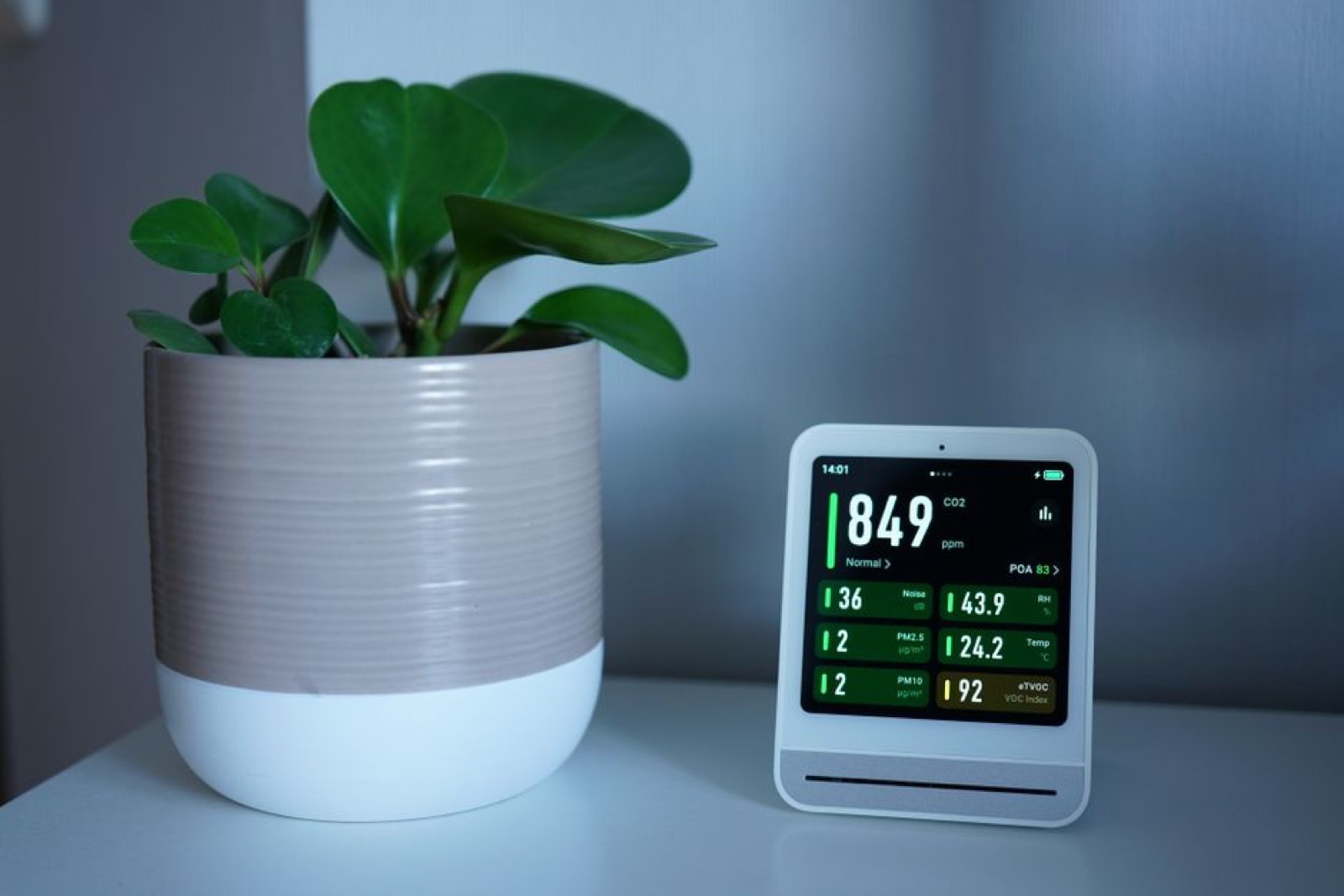
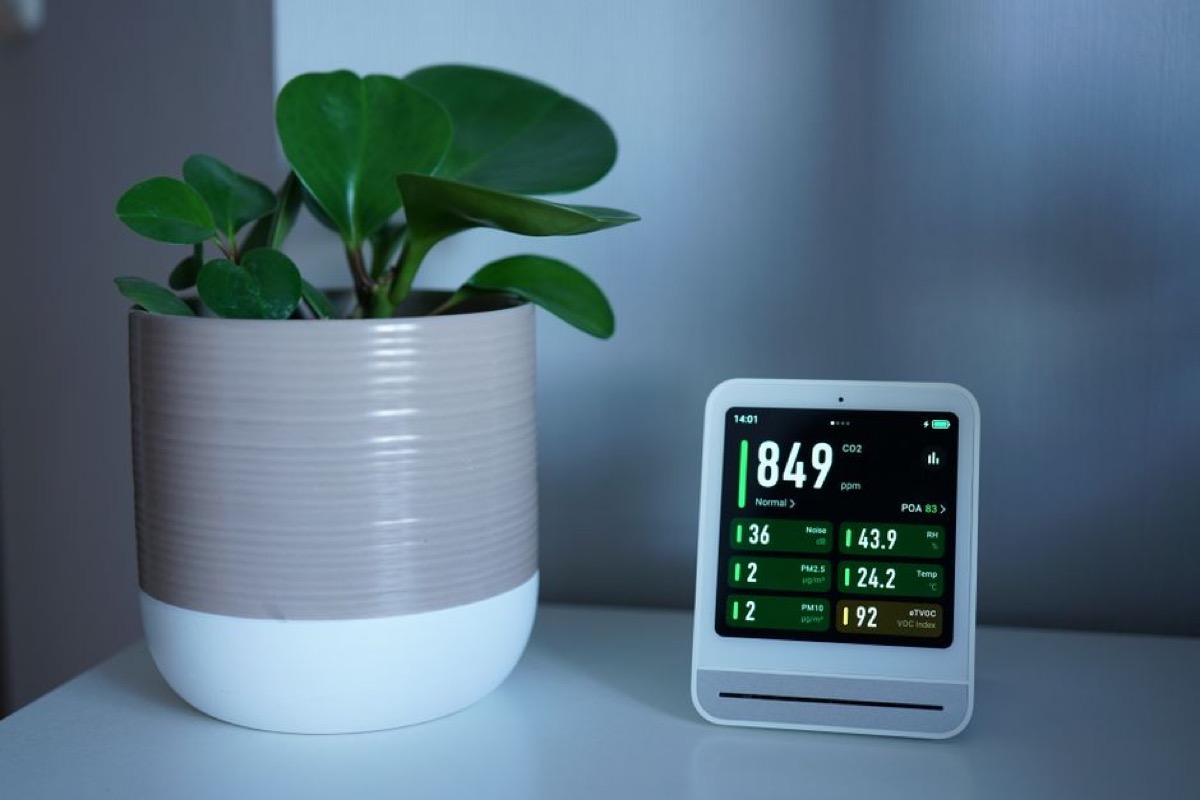
The most accurate method is monitoring PM2.5 with a dedicated air quality sensor (the Pexels image at the top of this article shows exactly this setup - a PM2.5/CO2 monitor on a home office desk). When your purifier's filter is working properly, indoor PM2.5 should drop measurably within 30-60 minutes of running on medium. When it stops dropping as quickly or stops responding to auto mode, the HEPA layer is saturating.
For carbon saturation (smoke/odor filtering), your nose is the signal. When you can smell cooking, pet odor, or outdoor air again after the purifier has been running for an hour, the carbon layer needs replacement. This usually happens before the HEPA layer fails on particle capture - especially in high-odor environments.
Smart purifiers (Levoit 400S and 600S, Coway 400S) track actual air volume processed through the filter and give more accurate replacement timing than fixed-interval indicators. If your unit has an app, check filter life there rather than counting months on a calendar.
Filter Subscription Plans: Worth It?
Amazon Subscribe and Save on replacement filters saves 5-10% per order with no commitment. On the Levoit Core 400S filter at $49.99, that is $2.50-5.00 per replacement - small, but consistent savings with no downside as long as you remember you can pause or cancel anytime.
The risk with subscriptions is over-ordering. Amazon defaults most filter subscriptions to 6-month delivery intervals. If your filter is still showing 40% life remaining when the new one arrives, you are building inventory you do not need. Check your unit's filter indicator before each scheduled shipment and delay it if life remains.
Levoit's direct subscription from levoit.com is an alternative for OEM buyers who want to avoid Amazon, but the price advantage is minimal and the convenience of Amazon's return/exchange process is hard to beat for consumables.
Buyer's Guide: Choosing a Purifier Based on Long-Term Cost
Best overall value (performance + long-term cost): The Levoit Core 400S. At $430 over five years with OEM filters, it delivers 358 sq ft of coverage at 4.8 ACH, smart features, and the most efficient filter ecosystem of any mid-range purifier. For most single-room or bedroom applications, it is the default recommendation.
Lowest total cost: The Winix 5500-2 edges out the Levoit 400S on 5-year total cost at $395-465 vs $430, and its washable carbon layer is a structural advantage for high-odor homes. Coverage is similar (360 sq ft vs 358 sq ft). The tradeoff is the lack of WiFi/app control and a bulkier physical footprint. For buyers who do not need smart features, the Winix wins on cost.
Large homes: The Coway Airmega 400 at $875 over five years (OEM) sounds expensive, but the coverage math often makes it cheaper than two or three smaller units. If you need 1,000+ sq ft of coverage, price out two Levoit Core 600S units ($550 each, so $1,100 over 5 years) versus one Airmega 400 at $875. The Airmega wins on total cost and on the quality of airflow from a single high-CADR unit.
Pet-heavy households or wildfire regions: OEM filters are worth the premium. The thicker carbon beds in Levoit and Coway OEM filters handle sustained high-odor loads better than third-party alternatives. Budget the higher annual cost into your purchase decision upfront.
Frequently Asked Questions
How much does it cost to replace an air purifier filter per year?
Annual filter costs range from $40 to $130 per year depending on the model and whether you use OEM or third-party filters. Levoit Core 400S OEM filters run about $50/year; Winix 5500-2 OEM filters run about $41-55/year; Coway Airmega 400 OEM filters cost about $105/year. Third-party alternatives cut those costs by 30-50% with minimal performance tradeoffs on HEPA efficiency.
Are third-party air purifier filters as good as OEM?
For HEPA particle capture, well-rated third-party filters from established brands (Flintar, Future Way, Colorfullife) test at 99.97% efficiency at 0.3 microns - matching OEM specs. The main differences are carbon layer thickness and filter media density. OEM filters from Levoit and Coway use thicker activated carbon beds that last longer at high smoke or VOC loads. For normal household use - dust, pollen, pet dander - quality third-party filters are a reasonable cost-saving choice. During wildfire season or if you have strong odor sources, stick with OEM for the heavier carbon capacity.
How often should I replace my air purifier filter?
Most HEPA filters need replacement every 6-12 months under normal use. Pre-filters (washable) should be rinsed every 2-4 weeks. Carbon filters saturate faster in high-odor environments - during wildfire season or in homes with smokers or pets, carbon layers may need replacement 2-3x more frequently. Follow your unit's filter indicator rather than a calendar - modern smart purifiers (Levoit 400S, Coway 400S) track actual air volume processed and give more accurate replacement signals than fixed-schedule timers.
What is the cheapest air purifier to maintain long-term?
The Winix 5500-2 has the lowest long-term maintenance cost of any quality HEPA purifier we track. Its Filter H (part 116130) costs $41-55/year OEM, and the washable AOC carbon pellet layer means you only replace the HEPA annually - you rinse the carbon layer rather than buy a new one. Over 5 years with OEM filters, total filter spend is roughly $205-275. The Levoit Core 400S is close behind at approximately $250 over 5 years using OEM filters.
Does the Coway Airmega 400 cost more to maintain than Levoit?
Yes - the Coway Airmega 400 costs roughly twice as much annually in filter replacements compared to the Levoit Core 400S. OEM filter sets for the Airmega 400 (AP-2015-FP) run $90-105 per year; Levoit Core 400S genuine filters run about $50 per year. Over 5 years, the Coway costs $450-525 in filters vs $250 for the Levoit. Third-party Coway filters bring this down to $140-175 over 5 years, narrowing the gap significantly.
Is it worth buying an extended-life or subscription filter plan?
Subscription programs (Subscribe and Save on Amazon, Levoit's direct subscription) save 5-15% per filter set, which adds up over years. On the Levoit Core 400S at $50/year OEM, a 10% Subscribe and Save discount saves $5/year - small individually, but consistent. The bigger risk is over-ordering: subscriptions default to 6-month intervals, but heavy-use environments (pets, smoke, cooking) may need more frequent changes while low-use households may go 12 months. Set a reminder to check your filter indicator before each scheduled shipment and pause if the indicator shows filter life remaining.
The 2026 Verdict
Filter cost is not the only reason to choose an air purifier, but it is the variable most buyers underestimate. The unit price is a one-time purchase. The filter cost is the real subscription you are signing up for.
For most single-room applications, the Levoit Core 400S delivers the best combination of upfront price, filter cost, and filtration performance. The Winix 5500-2 edges it out on long-term cost if you are willing to skip smart features. The Coway Airmega 400 is the right call for large open-plan homes where its coverage area eliminates the need for multiple smaller units.
Whatever model you choose, buy OEM filters during wildfire season or heavy-use periods. The carbon capacity difference is real and measurable when you are pushing your purifier hard. For the other eight months of normal household use, quality third-party filters are a reasonable way to trim your annual maintenance bill.
Related Articles
- Best Air Purifier for Wildfire Smoke 2026: HEPA + Carbon Guide
- Levoit Core 300S vs Core 400S: Which Levoit Air Purifier is Best?
- Coway Airmega 400 vs Levoit Core 600S: Which Air Purifier Wins?
- Best Air Purifier Under $200: Top Budget Models Ranked 2026
Affiliate Disclosure: AirFilterGeek participates in the Amazon Services LLC Associates Program, an affiliate advertising program designed to provide a means for sites to earn commissions by linking to Amazon.com. We earn commissions from qualifying purchases made through our Amazon links at no additional cost to you. These commissions support our research, testing, and content creation. We recommend products based on specifications, performance, and value, not commission rates.
Photos provided by Pexels.