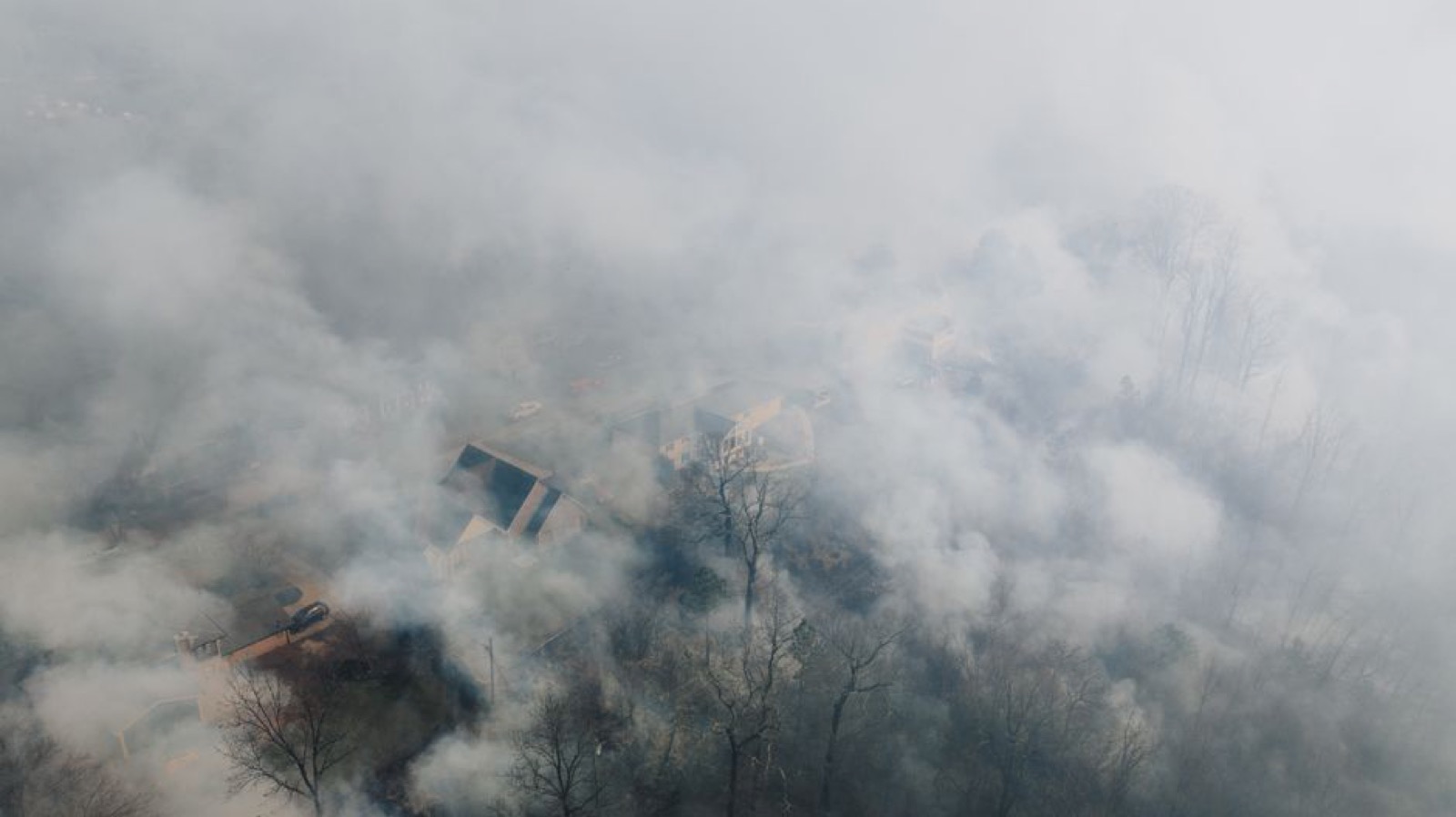
Wildfire smoke is not regular household dust. It carries PM2.5 particles small enough to penetrate deep into the respiratory system, plus a mixture of volatile organic compounds (VOCs) and gases that HEPA filters alone cannot capture. During an active smoke event, indoor PM2.5 can reach many times the EPA's 12 µg/m³ annual standard even with windows closed.
Below are six air purifiers ranked by smoke-specific CADR, activated carbon capacity, and room coverage — the three specs that matter most when AQI climbs into unhealthy ranges. Each spec comes from manufacturer documentation, AHAM Verifide certification, or ENERGY STAR listings. Where independent test data from HouseFresh or Consumer Reports is available, it is cited alongside manufacturer claims.
Important limitation: An air purifier addresses particulate matter (PM2.5) and some VOCs indoors. It does not remove carbon monoxide and does not make smoky outdoor air safe to breathe. During wildfire events, follow EPA and local air quality guidance — seal your home, monitor AQI at AirNow.gov, and evacuate if authorities recommend it.
Quick Picks: Best Air Purifiers for Wildfire Smoke
| Model | Smoke CADR | Coverage | Best For | Price |
|---|---|---|---|---|
| Jaspr Air Scrubber | ~577 CFM (manufacturer-stated) | Manufacturer-stated | Large open spaces — smoke-focused design | See price at Jaspr.co |
| Levoit Core 600S | 391 CFM (ENERGY STAR) | 606 sq ft (4.8 ACH) | Best large-room value | Check Price on Amazon |
| Coway Airmega 400 | 328 CFM (AHAM Verifide) | 1,560 sq ft (2 ACH) | Whole-home coverage | Check Price on Amazon |
| Winix 5500-2 | 232 CFM (AHAM Verifide) | 360 sq ft (4.8 ACH) | Living room value pick | Check Price on Amazon |
| Levoit Core 400S | 231 CFM (AHAM Verifide) | 358 sq ft (4.8 ACH) | Smart mid-range | Check Price on Amazon |
| Coway AP-1512HH | 233 CFM (AHAM Verifide) | 361 sq ft (4.8 ACH) | Bedroom budget pick | Check Price on Amazon |
Why Wildfire Smoke Is Dangerous Indoors
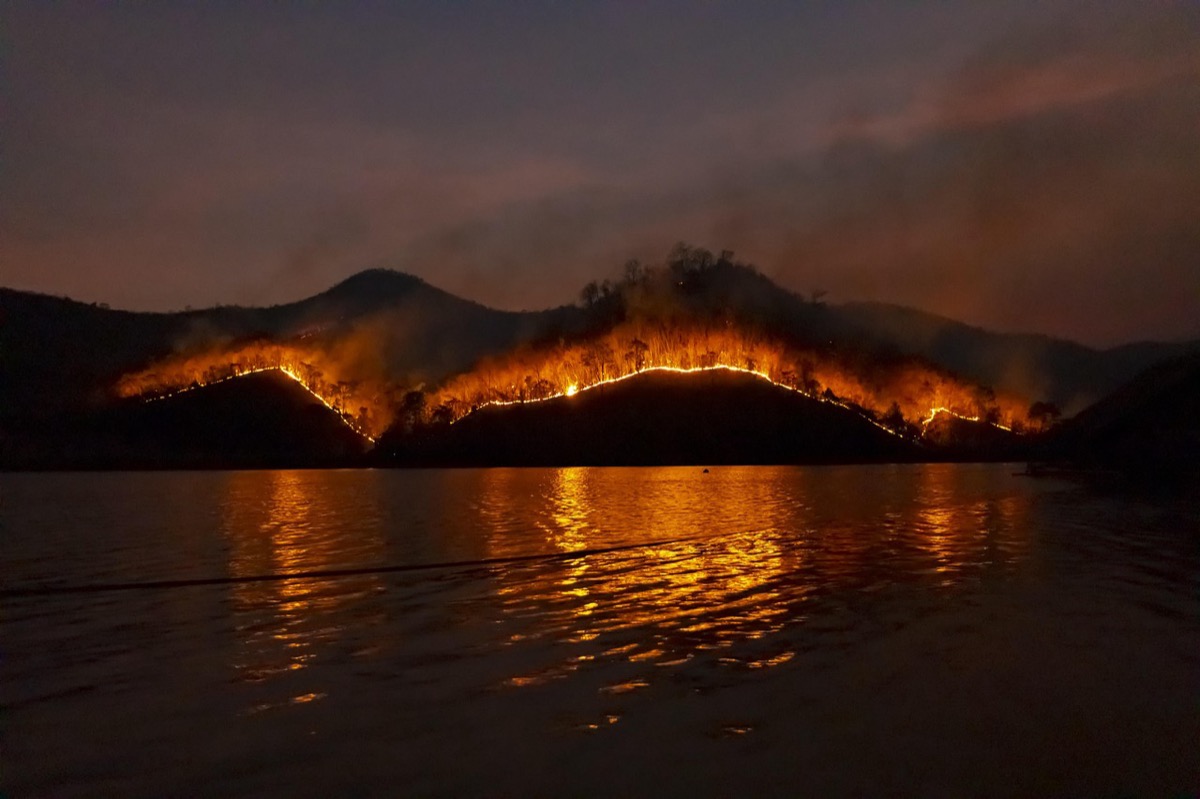
Wildfire smoke is chemically distinct from ordinary household particulate matter. It contains:
- PM2.5 and PM1.0: Fine particles 2.5 microns and smaller that can penetrate deep into the respiratory system. These are the particles HEPA filters capture.
- Volatile organic compounds (VOCs): Benzene, formaldehyde, acrolein, and polycyclic aromatic hydrocarbons released when vegetation combusts. These are gases — HEPA does not capture them. Only activated carbon adsorbs them.
- Carbon monoxide (CO): A colorless, odorless gas. Consumer air purifiers with HEPA and activated carbon filters do not remove CO. Use a CO detector and follow evacuation guidance if CO levels rise.
- Ash and coarse particles: Larger fragments that settle on surfaces and can re-enter the air with movement. Pre-filters and HEPA catch these easily.
During the 2023 Canadian wildfire smoke events that affected the U.S. Midwest and Northeast, the EPA reported AQI readings exceeding 300 in multiple cities for consecutive days — well into the "hazardous" range (source: AirNow.gov). A properly sized HEPA purifier running on high in a sealed room can meaningfully reduce indoor PM2.5 concentrations, though the degree of reduction depends on room sealing, purifier sizing, and outdoor infiltration rate.
HEPA vs Carbon: What Each Filter Does
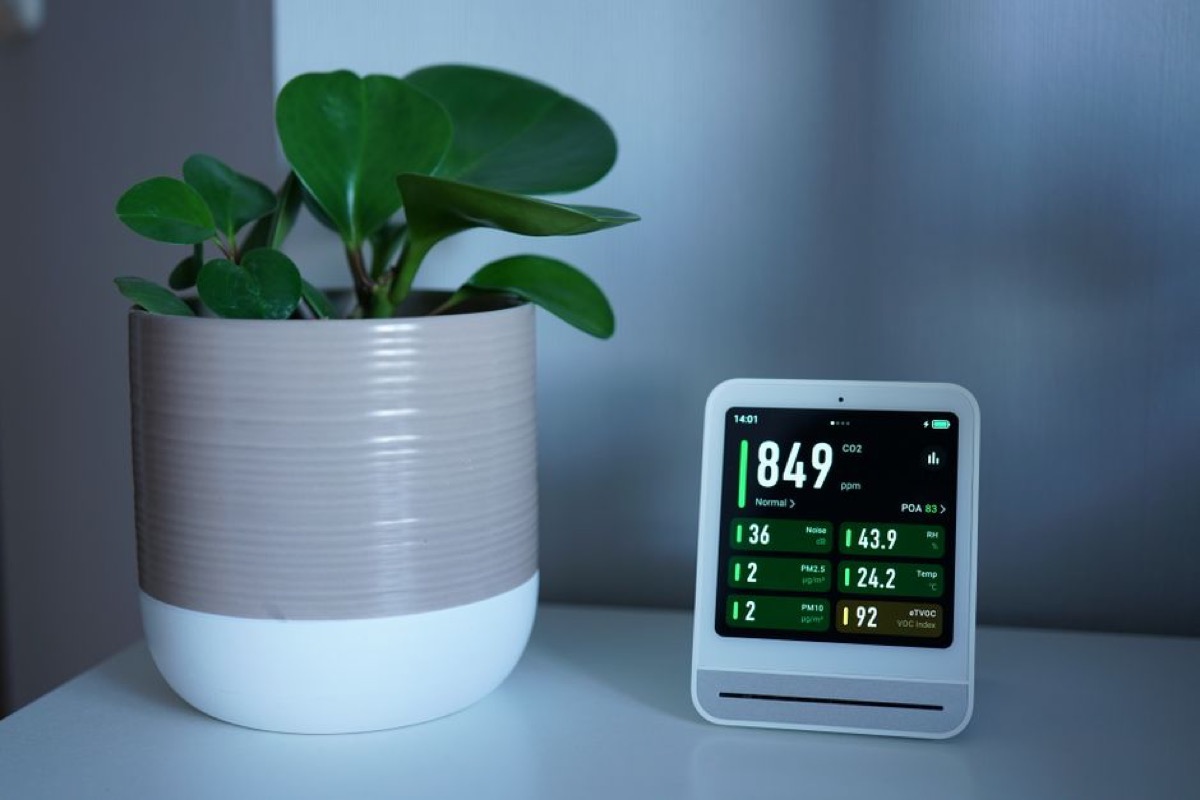
Wildfire smoke requires two different capture mechanisms — one for particles and one for gases. Most budget purifiers handle one but not the other.
True HEPA: Handles Particles
True HEPA filters capture at least 99.97% of airborne particles at 0.3 microns — the "most penetrating particle size" (MPPS) where filtration efficiency is at its theoretical minimum. At both larger and smaller sizes, capture efficiency is actually higher. Wildfire smoke PM2.5 falls within this range.
A filter labeled "HEPA-type" or "HEPA-like" does not meet the 99.97% standard — look for "True HEPA." Note: the U.S. True HEPA standard (99.97% at 0.3 µm) and the European EN 1822 H13 classification use different test protocols. A manufacturer claiming 99.97% efficiency does not automatically hold EN 1822 H13 certification, and H13 is not a "higher grade" than U.S. True HEPA — they are separate frameworks.
Activated Carbon: Handles Gases and Odors
Activated carbon works by adsorption — VOC molecules bond to the surface area of carbon granules. The key factor is carbon mass. Thin carbon-coated fabric sheets (common in budget purifiers) have limited adsorption capacity and saturate quickly under heavy smoke conditions. Look for units with a dedicated carbon filter layer, ideally pellet-based or granular. The Winix 5500-2's washable AOC carbon filter and the Coway Airmega 400's dual Max2 carbon layers are examples of more substantial carbon implementations.
What Neither Filter Does
Neither HEPA nor standard activated carbon removes carbon monoxide (CO). CO is a small, non-polar molecule that passes through both filter types. A purifier addresses particulate and some gas-phase compounds — it does not substitute for a CO detector, home sealing, or evacuation when recommended by authorities.
CADR Sizing for Wildfire Smoke
CADR (Clean Air Delivery Rate) measures how many cubic feet of clean air a purifier delivers per minute. AHAM certifies three separate CADR values — smoke, dust, and pollen. For wildfire smoke, use the smoke CADR number.
Standard AHAM guidance: CADR should equal at least two-thirds of your room's square footage (based on the AHAM suggested room-size framework at 4.8 ACH with 8-ft ceilings). For wildfire smoke events, oversizing helps — a unit with a smoke CADR at least equal to your room's full square footage provides faster air turnover during high-AQI periods.
Note: manufacturer room-size claims may use different air-change assumptions than the AHAM 4.8 ACH basis. Always check whether coverage is stated at 4.8 ACH, 2 ACH, or 1 ACH — lower ACH bases produce larger coverage numbers from the same CADR.
| Room Size | Standard Min. CADR (⅔ rule) | Smoke-Season Target (1× rule) |
|---|---|---|
| 150 sq ft (small bedroom) | 100 CFM | 150+ CFM |
| 300 sq ft (standard room) | 200 CFM | 300+ CFM |
| 400 sq ft (large room) | 266 CFM | 400+ CFM |
| 500 sq ft (large open space) | 333 CFM | 500+ CFM (or two mid-size units) |
| 800 sq ft (open-plan main floor) | 533 CFM | 800+ CFM (two units recommended) |
CADR is measured in a sealed test chamber. Real-world performance is lower in imperfectly sealed spaces with ongoing outdoor air infiltration.
Top 6 Air Purifiers for Wildfire Smoke — Full Reviews
Jaspr Air Scrubber
The Jaspr is a consumer air purifier designed around wildfire smoke. It ships with a PM2.5 sensor and a separate VOC sensor, so the display reports current indoor air quality numerically rather than through an ambiguous colored light. The manufacturer states a top-speed smoke CADR around 577 CFM. Published testing by HouseFresh measured a PM1 CADR of approximately 353 CFM in a natural-ventilation test room.
| Smoke CADR | ~577 CFM (manufacturer-stated); HouseFresh measured ~353 CFM PM1 in natural-ventilation test |
| Filtration | HEPA stage + deep activated carbon bed (manufacturer-stated) |
| Sensors | PM2.5 + VOC (dual sensor) |
| Housing | Powder-coated steel |
| Price | $1,199 (manufacturer-stated) |
All specs are manufacturer-stated. Jaspr does not have a canonical entry in AirFilterGeek's verified product database.
- Dual PM2.5 + VOC sensors provide numerical air quality readings
- Deep activated carbon bed designed for smoke VOC load
- Powder-coated steel housing built for continuous operation
- Sensor-driven auto mode responds to smoke infiltration
- $1,199 — significantly more expensive than other options
- No AHAM Verifide CADR certification
- Not widely available through retail channels
- All performance claims are manufacturer-stated only
Levoit Core 600S
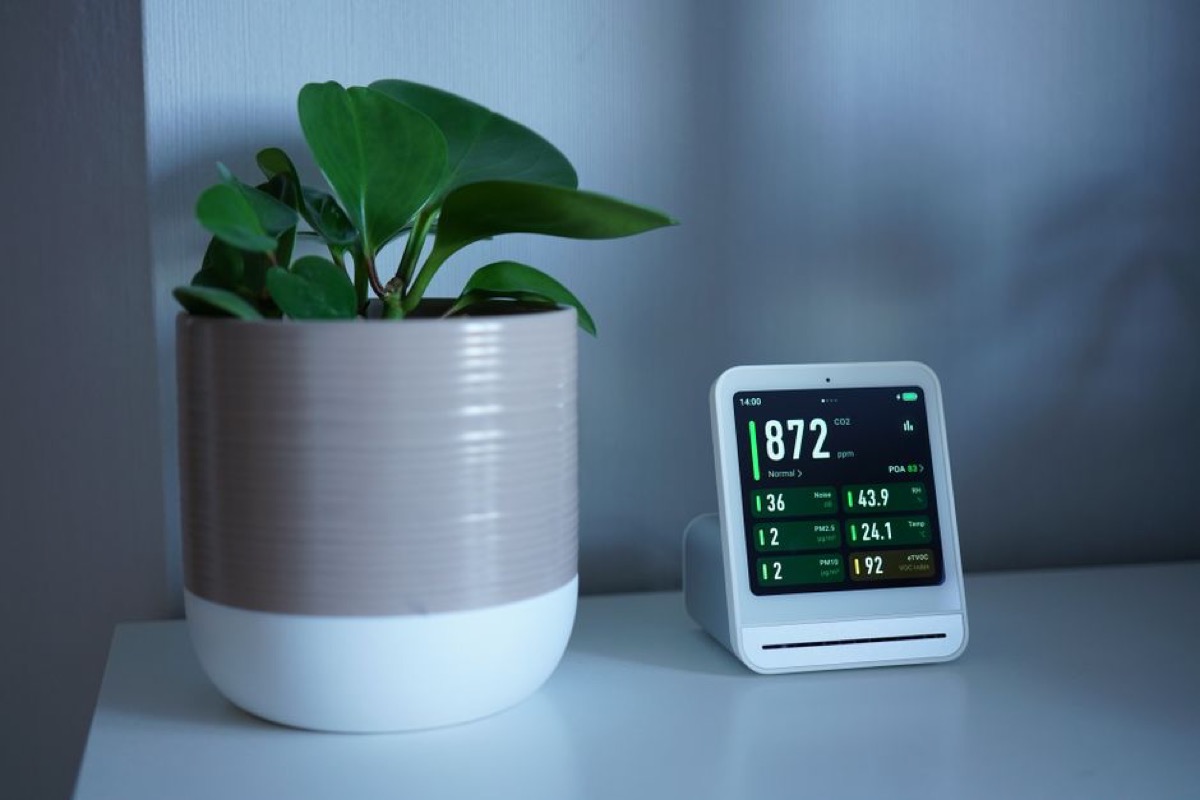
The Core 600S is the strongest single-room option for large open spaces. Its 391 CFM smoke CADR (ENERGY STAR verified) covers 606 sq ft at 4.8 ACH with 8-ft ceilings. Published testing by HouseFresh measured 375 CFM at top speed in a 728 cubic foot chamber.
| Smoke CADR | 391 CFM (ENERGY STAR) |
| Dust / Pollen CADR | 398 / 436 CFM |
| Coverage | 606 sq ft at 4.8 ACH |
| Filtration | True HEPA stage + activated carbon (ARC formula, 160g standard) |
| Noise | 26–55 dB |
| Power | 48W max |
| Smart Features | Wi-Fi, VeSync app, AirSight Plus PM2.5 sensor |
| Warranty | 2-year limited |
Note on filtration: Levoit states the HEPA stage captures at least 99.97% of particles at 0.3 microns. Current Levoit product listings use "HEPA-Grade" wording; EN 1822 H13 certification is not documented for this model.
- 391 CFM smoke CADR — strongest ENERGY STAR-verified in this group
- AirSight Plus PM2.5 sensor with app for real-time indoor air quality tracking
- 26 dB sleep mode for overnight use
- Specialty filter variants (Smoke Remover, 360g carbon) available
- Standard carbon filter is 160g — lighter than some competitors
- 55 dB at high speed is noticeable
- EN 1822 H13 certification not documented
Coway Airmega 400
The Airmega 400 is the pick for households that need wide coverage. With a 328 CFM smoke CADR (AHAM Verifide) and coverage of 1,560 sq ft, it has the largest footprint in this roundup. Note: the 1,560 sq ft coverage figure is based on 2 ACH, not 4.8 ACH — fewer air changes per hour means the same CADR covers a bigger area on paper but filters air less frequently.
| Smoke CADR | 328 CFM (AHAM Verifide) |
| Dust / Pollen CADR | 328 / 400 CFM |
| Coverage | 1,560 sq ft at 2 ACH (manufacturer / AHAM basis) |
| Filtration | Green True HEPA + Max2 dual activated carbon (two cartridges) |
| Noise | 22–52 dB |
| Power | 66W max |
| CARB | Certified |
| Warranty | 5-year limited |
- Dual Max2 filter cartridges provide double-sided carbon + HEPA
- 360-degree dual intake reduces dead zones in large rooms
- 5-year warranty — longest in this group
- CARB certified
- 1,560 sq ft coverage is at 2 ACH — at 4.8 ACH the effective room would be smaller
- No Wi-Fi or app connectivity
- ~$349 price point
Winix 5500-2
The Winix 5500-2 has been a consistent recommendation for smoke filtration. Its washable AOC (Advanced Odor Control) pelleted carbon filter provides meaningful VOC capacity that can be rinsed and reused rather than replaced. The PlasmaWave ionizer can be toggled off. CARB certified. Currently available at clearance pricing — it is officially discontinued in the U.S. and Canada (replaced by the Winix 5510).
| Smoke CADR | 232 CFM (AHAM Verifide) |
| Dust / Pollen CADR | 243 / 246 CFM |
| Coverage | 360 sq ft at 4.8 ACH |
| Filtration | True HEPA (99.99% at ≥0.3 µm per Winix spec) + washable AOC pelleted carbon + disableable PlasmaWave ionizer |
| Noise | 27.8–50 dB |
| Power | 70W max |
| CARB | Certified |
| Warranty | 2-year limited |
- Washable AOC pelleted carbon filter — rinse and reuse, reducing long-term cost
- CARB certified; PlasmaWave ionizer is disableable
- Clearance pricing while stock lasts
- 4-stage filtration well-documented for smoke particulate
- Discontinued — filter and unit availability will decrease over time
- No Wi-Fi or app connectivity
- No built-in PM2.5 sensor for numerical readings
Levoit Core 400S
The Core 400S delivers 231 CFM smoke CADR (AHAM Verifide) with AirSight Plus laser PM2.5 monitoring and VeSync app control. At 358 sq ft coverage (4.8 ACH), it fits most bedrooms and standard living rooms.
| Smoke CADR | 231 CFM (AHAM Verifide) |
| Dust / Pollen CADR | 240 / 259 CFM |
| Coverage | 358 sq ft at 4.8 ACH |
| Filtration | True HEPA stage + activated carbon honeycomb. Levoit states the HEPA stage captures at least 99.97% of particles at 0.3 microns; EN 1822 H13 certification is not documented for this model. |
| Noise | 24–52 dB |
| Power | 40W max |
| Smart Features | Wi-Fi, VeSync app, AirSight Plus PM2.5 sensor |
| Warranty | 2-year limited |
- Real-time PM2.5 sensor with app tracking shows purifier performance during smoke events
- Auto mode responds within seconds to smoke infiltration
- 24 dB low speed — quieter than most competitors
- ENERGY STAR certified
- 231 CFM smoke CADR is adequate for rooms up to 358 sq ft — not enough for larger open spaces
- Carbon capacity (honeycomb) is lighter than pelleted carbon alternatives
Coway AP-1512HH Mighty
The Coway AP-1512HH delivers genuine 4-stage filtration (pre-filter, deodorization carbon filter, True HEPA, and a disableable ionizer) in a compact form factor. Its 233 CFM smoke CADR (AHAM Verifide) covers 361 sq ft at 4.8 ACH.
| Smoke CADR | 233 CFM (AHAM Verifide) |
| Dust / Pollen CADR | 246 / 240 CFM |
| Coverage | 361 sq ft at 4.8 ACH |
| Filtration | True HEPA (99.97% at 0.3 µm) + deodorization carbon filter + disableable ionizer |
| Noise | 24–53 dB |
| Power | 77W max |
| Warranty | 3-yr motor/electronics, 1-yr internal/functional parts. Filters excluded. |
Note on carbon: the AP-1512HH's deodorization filter uses an impregnated carbon layer (carbon weight not published by Coway). This is a thinner carbon implementation than the Winix 5500-2's washable AOC pelleted carbon — adequate for moderate smoke exposure but may saturate sooner during extended heavy-smoke events.
- Strong AHAM Verifide smoke CADR for the price
- Eco mode cuts power when air is clean
- Compact footprint fits bedrooms easily
- Filter life indicator takes guesswork out of replacements
- Thin carbon layer — limited VOC capacity during heavy smoke
- Tiered warranty (3-yr/1-yr) is shorter than Airmega 400's 5-year
- No Wi-Fi or app
- Ionizer present (disableable) — CARB status not verified in canonical data
How to Run Your Air Purifier During an Active Smoke Event
Owning the right unit is half the equation. Running it correctly during a smoke event is the other half.
- Seal the space first. Close all windows and doors. A purifier recirculates indoor air — if outdoor smoke keeps entering through gaps, the unit cannot keep up. Use draft stoppers under doors during heavy smoke events. Note: sealing alone does not protect against carbon monoxide — use a CO detector.
- Run on high, not auto. Auto mode ramps up when the internal sensor detects particles, but sensors can lag. During active smoke events, set to high manually and keep it there until AQI drops below 100 (check AirNow.gov).
- Minimize other particle sources. Cooking (especially sautéing and frying), candles, and incense create indoor PM2.5 that competes for filter capacity. Minimize these when outdoor air quality is poor.
- Position the unit correctly. Allow at least 18 inches clearance on all sides for 360-degree intake models. For side-intake models like the Coway AP-1512HH, position the intake side toward the center of the room.
- Monitor PM2.5. If your unit has a built-in sensor and app, use it. If not, a standalone PM2.5 monitor confirms whether your purifier is keeping up. The EPA's annual standard is 12 µg/m³ — target that or below indoors.
- Replace filters proactively during smoke season. Running a purifier 24/7 on high during heavy smoke compresses filter lifespan. Inspect the pre-filter weekly and vacuum it if visibly loaded. Replace HEPA and carbon filters proactively — do not wait for the indicator to trigger.
VOC and Odor Removal: What Actually Works
The smell of wildfire smoke is caused by VOCs — benzene, formaldehyde, guaiacol, and other combustion byproducts. HEPA filters are completely ineffective against these gases. Activated carbon is the consumer technology that addresses them through adsorption.
Carbon quality varies significantly:
- Thin carbon fabric (budget units): A carbon-coated fabric sheet with limited actual carbon mass. Saturates quickly under heavy smoke load — sometimes within days during an active smoke event.
- Pellet/granular carbon (mid-range and above): A dedicated layer of activated carbon pellets or granules with meaningful mass. Higher adsorption capacity. The Winix 5500-2's washable AOC pelleted carbon and the Coway Airmega 400's dual Max2 carbon cartridges fall in this category.
During extended smoke events (multiple days), expect carbon saturation to cause odor breakthrough before the HEPA filter stops working. If the smoke smell returns indoors even with the purifier running, it is the carbon that needs attention — not the HEPA.
What carbon does not do: Activated carbon does not remove carbon monoxide. CO passes through carbon filters. A purifier is not a substitute for a CO detector or for following evacuation guidance during wildfire events.
Frequently Asked Questions
Does an air purifier actually help with wildfire smoke?
What CADR rating do I need for wildfire smoke?
Do I need both HEPA and carbon filters for wildfire smoke?
How often do I need to replace filters during wildfire smoke events?
Should I close windows when running a purifier during smoke events?
Can I use a DIY box fan purifier instead of a commercial unit?
Does an air purifier remove carbon monoxide from wildfire smoke?
The 2026 Verdict
For maximum wildfire smoke coverage, the Jaspr Air Scrubber offers the highest manufacturer-stated smoke CADR and purpose-built smoke features — but all its performance claims are manufacturer-stated, and it lacks AHAM Verifide certification. The Levoit Core 600S provides the strongest ENERGY STAR-verified smoke CADR at a much lower price. The Coway Airmega 400 covers the largest footprint (note: at 2 ACH, not 4.8). The Winix 5500-2 offers the best carbon value with its washable AOC filter while stock lasts. For bedrooms, the Coway AP-1512HH and Levoit Core 400S both deliver AHAM Verifide performance under $200.
The key principles: size generously for smoke events, get both HEPA and meaningful activated carbon, run on high during active smoke, and replace filters more frequently during smoke season. A correctly sized and properly operated purifier reduces indoor PM2.5 — but it does not remove carbon monoxide and does not substitute for sealing the home, monitoring AQI, or following evacuation guidance.