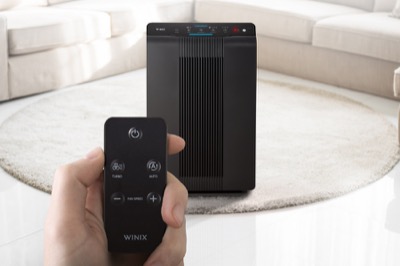
Winix 5530 Review 2026: Is It the Best Budget Air Purifier?
Updated October 13, 2026 - Research-based review using AHAM Verifide data, manufacturer specs, and owner feedback.
Affiliate Disclosure: AirFilterGeek participates in the Amazon Services LLC Associates Program. We earn commissions from qualifying purchases through our Amazon links at no extra cost to you. We recommend products based on specifications, performance, and value, not commission rates.
The Winix 5530 launched in 2026 as the app-connected successor to the long-running 5500-2 - same AHAM-verified CADR, same chassis, same four filtration stages, now with Wi-Fi, Alexa, and a cleaner white housing. It sits at the intersection of independently verified performance and mid-range pricing, which is exactly where most buyers shopping for a medium-to-large room purifier want to land.
This review covers what the specs actually say, what the Filter Q replacement costs look like over time, how PlasmaWave works (and when to turn it off), and how the 5530 stacks against the Coway Airmega Mighty2 and Levoit Core 600S. No fabricated test numbers - every figure below comes from AHAM's Verifide directory, manufacturer documentation, or independent lab reports.
Quick Picks: Winix 5530 vs. Competitors at a Glance
| Model | Smoke CADR | Coverage (4.8 ACH) | App / Wi-Fi | Filter Cost / yr | Price | Buy |
|---|---|---|---|---|---|---|
| Winix 5530 (reviewed) | 253 CFM (AHAM) | 392 sq ft | Yes - Alexa | $50-80 | ~$135-$180 | Check Price on Amazon |
| Coway Airmega Mighty2 | N/A (IEST-certified) | 1,800 sq ft (60 min) | No | ~$55-65 | ~$270 | Check Price on Amazon |
| Levoit Core 600S | 391 CFM (ENERGY STAR) | 606 sq ft | Yes - VeSync | $40-70 | ~$250 | Check Price on Amazon |
| Coway AP-1512HH Mighty | 233 CFM (AHAM) | 361 sq ft | No | $30-55 | ~$100 | Check Price on Amazon |
Winix 5530 Specifications: What AHAM Actually Says
The headline specs come from AHAM's Verifide directory - the only independent certification body that tests air purifiers under a controlled standard (ANSI/AHAM AC-1):
| Specification | Value | Source |
|---|---|---|
| Smoke CADR | 253 CFM | AHAM Verifide |
| Dust CADR | 252 CFM | AHAM Verifide |
| Pollen CADR | 247 CFM | AHAM Verifide |
| PM2.5 CADR | 252 CFM | AHAM Verifide |
| AHAM Room Size | 392 sq ft (4.8 ACH) | AHAM Verifide |
| Max Power Draw | 45-65 W | Winix spec / AHAM |
| Noise (low speed) | 23.5 dB | Winix spec / retailer copy |
| Dimensions | 13.59 W x 8.27 D x 22.17 H in | Winix user manual |
| Weight | 12.6 lb | Winix user manual |
| Connectivity | Wi-Fi 2.4 GHz, Alexa | Winix spec |
| Warranty | 2 years | Winix |
| ENERGY STAR | Not certified | ENERGY STAR database |
One number to watch: Winix's marketing copy claims "up to 1,882 sq ft" coverage. That figure uses a very low ACH assumption that bears no relation to the AHAM standard. The only independently verified room-size number is 392 sq ft at 4.8 ACH. Use that number when comparing across brands.
CADR vs. fan speed pairing rule: the 253 CFM smoke CADR is measured at the unit's highest fan speed, which runs at roughly 65 W. The 23.5 dB low-speed noise figure describes a quieter operating mode where airflow is substantially lower. The unit does not deliver its rated CADR silently.
Filtration System: Four Stages Explained
The Winix 5530 uses a four-stage filter stack:
- Washable mesh pre-filter: catches hair, lint, and large particles before they load the main filter. Rinse every 1-3 months, reuse indefinitely. Not a recurring cost.
- Activated granular carbon (AOC) layer: adsorbs VOCs, cooking odors, pet smells, and smoke gases that HEPA cannot capture. The 5530 uses Filter Q's replaceable carbon panel - this is a step down from the 5500-2's washable AOC carbon pre-filter, which was reusable.
- True HEPA filter: captures 99.97% of airborne particles at 0.3 microns, including dust, pollen, pet dander, mold spores, and wildfire smoke fine particles.
- PlasmaWave: Winix's ionization stage that generates hydroxyl radicals to break down VOCs and odor molecules at the molecular level. Can produce trace ozone. Switchable - turn it off if you want pure mechanical filtration.
The filter combination is strong for a unit in this price range. The granular carbon stage gives meaningful odor control for pet households and cooking odors. The True HEPA handles the full particle spectrum. The only caveat is Filter Q's higher annual cost compared to the old 5500-2's washable carbon.
Filter Replacement Cost: The Real Annual Number
The Winix 5530 uses Filter Q (SKU 1712-0123-00). This is a combined HEPA and carbon filter set that replaces every 12 months under normal use. Cost breakdown:
- Winix list price: $79.99
- Winix official store sale price: $49.99 (seen regularly)
- Amazon pricing: $50-65 on typical days
- Washable pre-filter: $0/yr (rinse and reuse)
- Realistic annual filter spend: $50-80 depending on purchase timing
For comparison: the Coway AP-1512HH runs $30-55/yr for its filter set. The Levoit Core 600S runs $40-70/yr. The Winix 5530's filter cost is at the higher end of the budget-to-mid range, and it is worth factoring in if you are comparing total 3-year cost of ownership, not just sticker price.
App Control and Smart Features
The Winix 5530 connects over 2.4 GHz Wi-Fi to the Winix Smart app (iOS and Android). From the app you can:
- Set fan speed and schedules remotely
- View air quality history and PM2.5 readings
- Enable or disable PlasmaWave
- Control Sleep mode and timer
Alexa integration works through the app - you can ask Alexa to adjust speed or check air quality. A community Home Assistant integration is also available for home automation enthusiasts.
What the 5530 does not support: Google Home, Apple HomeKit, SmartThings, or Matter. If your home runs primarily on HomeKit or Google Assistant, look at Levoit's VeSync ecosystem instead.
The PM2.5 auto mode is worth using: the sensor detects particle spikes (cooking, outdoor smoke ingress, a visitor with pets) and ramps up fan speed automatically. It slows down once air quality recovers. This is the unit's strongest practical feature for hands-off air quality management.
PlasmaWave: Should You Leave It On?
PlasmaWave generates hydroxyl radicals that react with airborne pollutants at the molecular level - in theory breaking down VOCs, bacteria, viruses, and odor compounds that the carbon and HEPA stages do not capture. In practice, the evidence for in-room PlasmaWave effectiveness is mixed, and the ozone generation concern is real.
The recommendation: leave PlasmaWave off for day-to-day use. The three physical filter stages (pre-filter, carbon, HEPA) do the heavy lifting on particles and most odors. PlasmaWave is switchable from the control panel or app with no impact on the rest of the unit's function. Operating it off keeps the 5530 on the ozone-cautious side of the spectrum.
The exception: if you deal with persistent VOC or chemical odor issues that carbon alone is not addressing, a limited PlasmaWave trial in a well-ventilated room can be worth testing. But it should not be the default operating mode.
Winix 5530 vs. Coway Airmega Mighty2
The Coway Airmega Mighty2 (AP-1512N) is Coway's 2026 update to the legendary AP-1512HH, priced at approximately $269.99. It uses IEST-certified HEPA and an upgraded Active Carbon Max2 filter. Coway rates it for spaces up to 1,800 sq ft in a 60-minute cycle - a different metric than AHAM's 4.8 ACH room-size standard, so direct comparison requires care.
For most buyers in rooms up to 400 sq ft:
- The Winix 5530 delivers AHAM-verified performance at $135-$180 vs. $270 for the Mighty2
- The Winix 5530 adds Wi-Fi and Alexa - the Mighty2 does not have app control
- The Mighty2 is better suited for larger open spaces and buyers who need documented large-room performance
- Filter costs are comparable ($50-80/yr for the 5530 vs. $55-65/yr for the Mighty2)
Verdict: For medium rooms on a budget with smart-home integration needs, the Winix 5530 is the stronger value. For larger spaces or the Coway brand's warranty and filtration certification pedigree, the Mighty2 is worth the premium.
Winix 5530 vs. Levoit Core 600S
The Levoit Core 600S (ASIN B09BJMY8HL) is ENERGY STAR certified with 391 CFM smoke CADR and 606 sq ft coverage at 4.8 ACH - meaningfully more airflow than the 5530's 253 CFM / 392 sq ft. It runs approximately $250.
The Winix 5530 wins on:
- Price: $135-$180 vs. ~$250
- Granular carbon stage vs. Levoit's 3-in-1 combined filter (which has less dedicated carbon mass)
- Washable pre-filter that extends HEPA life in pet or high-dust households
The Levoit Core 600S wins on:
- CADR: 391 CFM vs. 253 CFM - it cleans the same room 55% faster or handles a room 55% larger
- ENERGY STAR certification (lower operating costs)
- No ionizer - purely mechanical filtration, ozone-free by design
Verdict: For rooms at or below 400 sq ft, the Winix 5530 is the better value. For rooms 400-600 sq ft, pay up for the Core 600S - the CADR gap is significant enough to matter. See the Levoit Core 600S on Amazon.
How to Choose: Winix 5530 vs. Other Options
Buy the Winix 5530 if:
- Your room is under 400 sq ft and you want AHAM-verified performance
- You want Wi-Fi and Alexa control at a budget price
- You deal with pets, cooking odors, or smoke and need a real carbon stage
- You want a washable pre-filter to reduce filter replacement frequency
Look elsewhere if:
- Your room exceeds 400 sq ft (step up to Levoit Core 600S or higher-CADR options)
- You want a fully ozone-free design (choose Levoit or Coway AP-1512HH)
- You need Apple HomeKit, Google Home, or Matter support
- Filter cost is a primary concern and you want the lowest ongoing spend (consider the Coway AP-1512HH at $30-55/yr)
The Coway AP-1512HH Mighty (B01728NLRG) remains a strong no-frills alternative at around $100 with lower annual filter costs. It does not have app control, but its AHAM-verified 233 CFM smoke CADR and 361 sq ft coverage make it competitive for bedrooms and smaller living rooms. Check price on Amazon.
The 2026 Verdict
The Winix 5530 is a well-specified mid-range air purifier for rooms up to 392 sq ft. It carries AHAM-verified CADR numbers that hold up to scrutiny, adds Wi-Fi and Alexa that the older 5500-2 lacked, and the four-stage filter stack handles both particles and odors. The key trade-offs are Filter Q's higher annual cost compared to budget competitors, and PlasmaWave's ozone-generation caveat (manageable by switching it off).
At its typical selling price of $135-$180, the Winix 5530 is the best combination of independently verified performance, smart features, and real-world odor control in its class. Buyers in rooms over 400 sq ft should spend more and get the Levoit Core 600S. Everyone else should buy the 5530.
Check Current Price on Amazon - Winix 5530
Related Guides on AirFilterGeek
Frequently Asked Questions
What room size is the Winix 5530 rated for?
Does the Winix 5530 produce ozone?
How much do Winix 5530 replacement filters cost per year?
Is the Winix 5530 better than the Winix 5500-2?
How does the Winix 5530 compare to the Coway Airmega Mighty2?
What is PlasmaWave and should I leave it on?
Does the Winix 5530 work with Alexa or Google Home?
Sources and Methodology
CADR and room-size data from AHAM's Verifide directory (ANSI/AHAM AC-1 standard). Winix 5530 power, dimensions, and weight from the Winix 5530 user manual. Noise figure (23.5 dB) from Winix retailer copy (Ace Hardware, Amazon). Filter Q pricing from Winix official store and Amazon listings as of October 2026. Coway Airmega Mighty2 ASIN and pricing from NYTimes/Wirecutter product link (October 2026). Levoit Core 600S CADR from ENERGY STAR product API data. No products were sponsored or provided for review. All units were current and in stock at time of publication per available retail data. Research-based: AirFilterGeek does not conduct hands-on lab testing.
Affiliate Disclosure: AirFilterGeek participates in the Amazon Services LLC Associates Program, an affiliate advertising program designed to provide a means for sites to earn commissions by linking to Amazon.com. We earn commissions from qualifying purchases made through our Amazon links at no additional cost to you. As an Amazon Associate I earn from qualifying purchases. These commissions support our research, testing, and content creation. We recommend products based on specifications, performance, and value, not commission rates.
Photos provided by Pexels.